Smart Phone Users-Tap the 3 lines directly below for the navigation/site menu.
Looking to sell your Cybis? Smart Phone users expand the menu and go to Contact. Desktop/Tablet users go to Contact below in the navigation options.

Smart Phone Users-Tap the 3 lines directly below for the navigation/site menu.
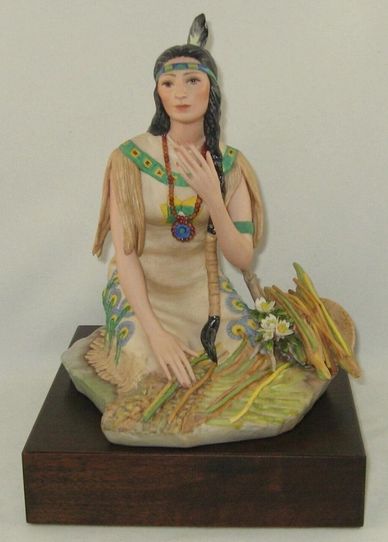
The Dakota sculpture was introduced as part of an initial release of three limited editions comprising the new collection titled North American Indian Series. Later marketing material often dropped "North" simply referring to the collection as American Indians. The numbered editions were restricted to 350 copies for distribution within the continental U.S. with another 150 copies designated for distribution outside the lower 48. Immediately, all 500 copies were ordered for each sculpture and the editions were listed as "Complete" on the 1969 price list. The use of the term "complete" for a status would later be changed to "Fully Subscribed" as it often took longer than a decade to produce and fill all orders. This lag in production obviously led to cancellations as the 150 reserved for "international distribution" was reduced to 75 by 1982 for the Dakota. Studio records indicate the sculpture was closed in 1983 with 425 total copies produced.
Issue / Completed Price
$1,500 $2,250
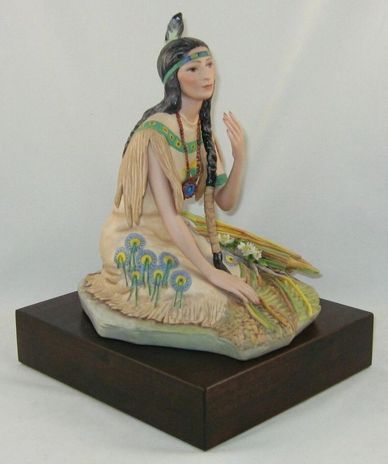
The full name for this sculpture (as released) was Dakota "Laughing Water", Minnehaha. While the studio did release three sculptures in the initial introduction, with one being Onondaga, Hiawatha, presumed to be her love, the two were not promoted as a pair. It's probable most merchants initially placed orders for all three.
The design numbers for the new series utilized the 700 series. This was the first time the studio repurposed an entire block of previously issued design numbers. In the 1950's the 700 series had been utilized for decorative items such as vases and other decorative wares. When found, those items generally have the design numbers written on the bottom in pencil. This practice was ended around 1962 to 1964. Later sculptures won't be found with design numbers written on them. The studio was not concerned that merchants or collectors would have a conflict with design numbers being recycled 15 years after the fact. In this case, #702 issued for the Dakota had originally been assigned to the Bud vase, 4" at a price of $2.50 in 1954. It's likely no one remembered the vase. Only when a vase marked #702 is found and research begins is it an issue. See a list of items using the 700 series on the 1954 merchant's price sheet.
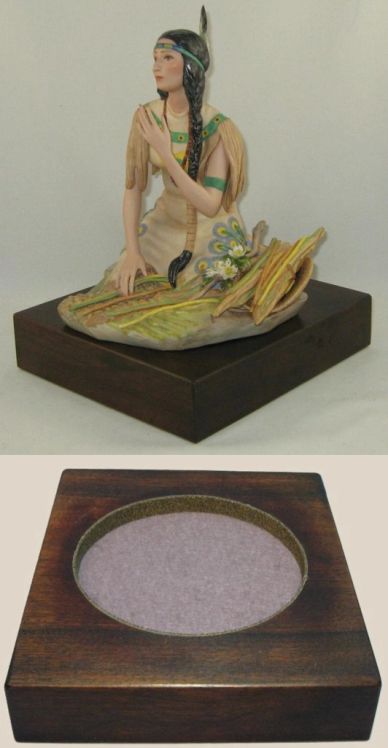
While all sculptures came with dark wooden bases, the Dakota (and Onondaga) porcelain sculpture was not permanently attached to the base. Instead the studio used a unique design whereby the bottom of the sculpture was specially created to fit inside an area of the wooden base to secure it in place. Only the Dakota and Onondaga utilized this base style. Many of the Dakota and Onondaga offered for sale on the secondary market are listed missing the wooden bases. Due to this unique base design, any porcelain sculpture missing the original base would not be considered in MINT condition and any pricing should be adjusted significantly. A missing base creates a higher risk for damage as the sculpture has less stability if not displayed sitting inside the wooden base. When purchasing any of these three, a sculpture without its base should be avoided.
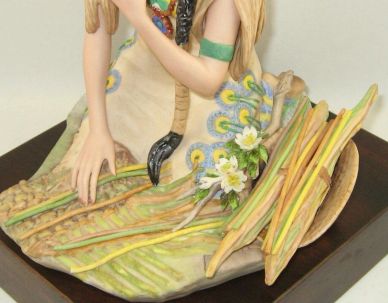
Minnehaha is very rarely found WITHOUT damage. Almost every piece reviewed sold on the secondary market over the last 25 years has some form of damage somewhere on the sculpture. The complexity of this piece makes it challenging to handle and to properly pack for shipping. There are numerous delicate parts ranging from the reeds in her basket to the strings hanging from the medallion decorations on her thighs to the fringe on her shoulders. More noticeably will be damage to fingers or the feather on her head. A few are documented with her front braid having been broken off and missing. (How that could have happened is beyond imagination.) Likely because of their location, the flowers are generally observed in tact.
No design variations have been noted but several color variations are known to exist beyond skin tone and those variations normally associated with artist's style and technique.
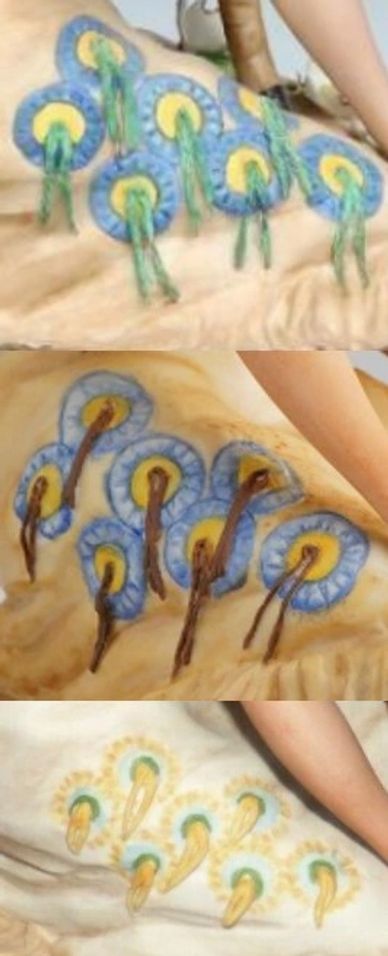
The medallion decorations on her thigh vary widely as shown above. Hanging strings often will have been broken off.
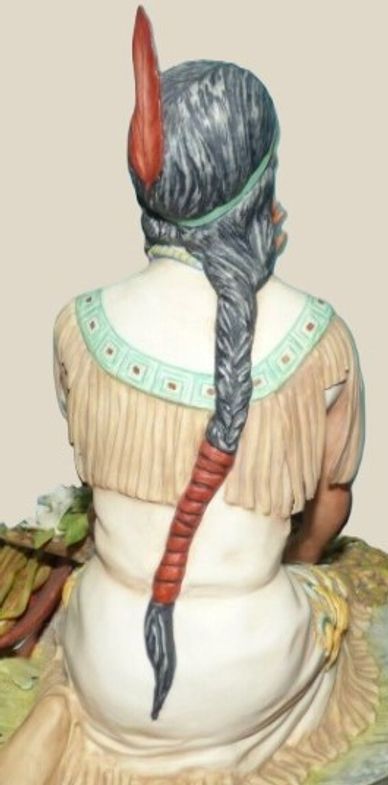
A few examples have been seen where the leather braid wrap and feather are red. The overwhelming majority of production models reviewed have tan wraps with feathers that are white with black accents as shown in the previous images.
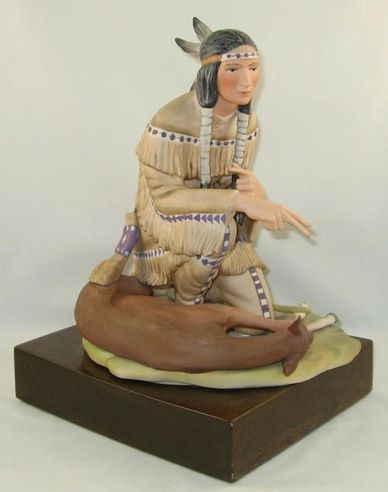
Onondaga , like Dakota, also began with a declared issued of 350 for the U.S. with 150 for distribution abroad. He too was reduced by 75 for international distribution prior to 1982 and closed in 1983.
Issue / Completed Price
$1,500 $2,250
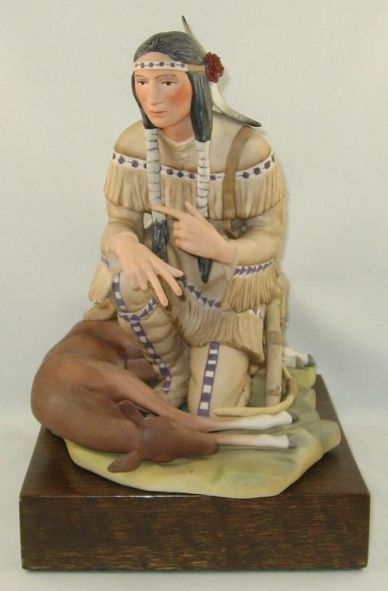
Issued as design number 701, Onondaga Hiawatha had a reissued number originally given to the 5 1/4" tall Bud vase. That vase sold for $3.00 in the mid 1950's.
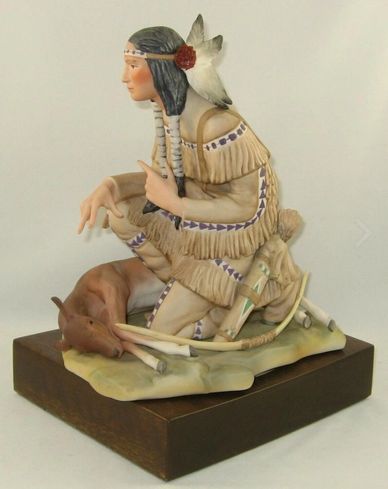
The wooden base for Onondaga was the same style as used on Dakota. The stated measurement of 11 1/2" tall includes the base. A missing base significantly reduces the value of a porcelain with no damage. A damaged porcelain with a missing base should be avoided all together.
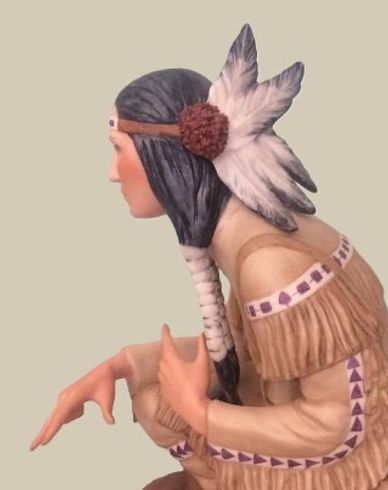
.
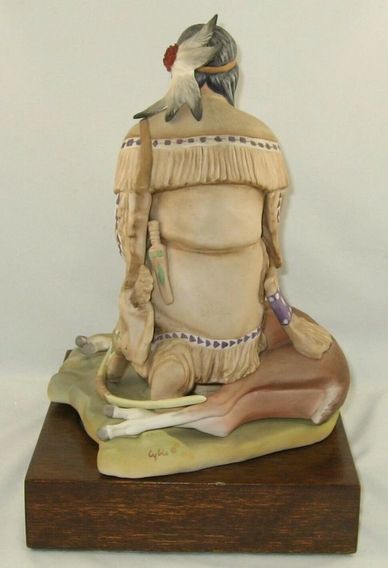
.
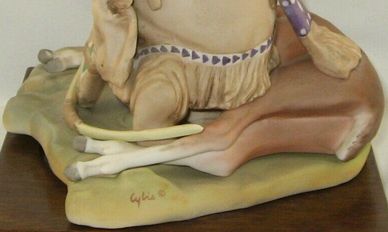
Apart from broken feathers, fingers and braids, the bow is an area of concern. It becomes easily detached if not handled or packed carefully and is very frequently missing on items listed on the secondary market.
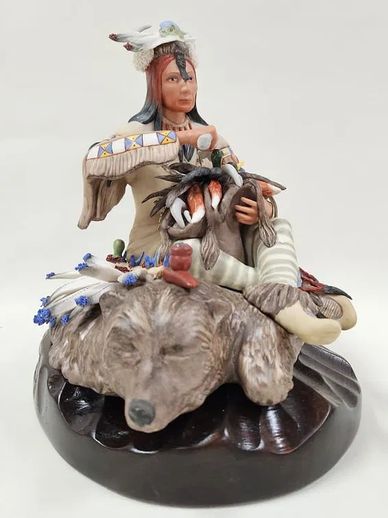
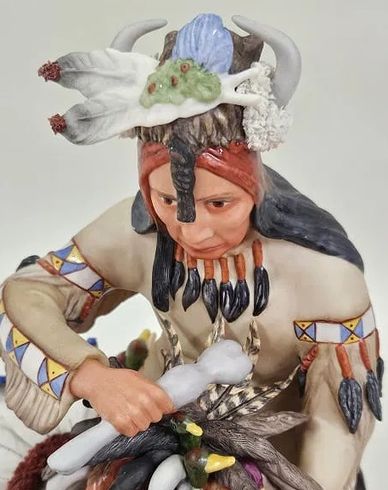
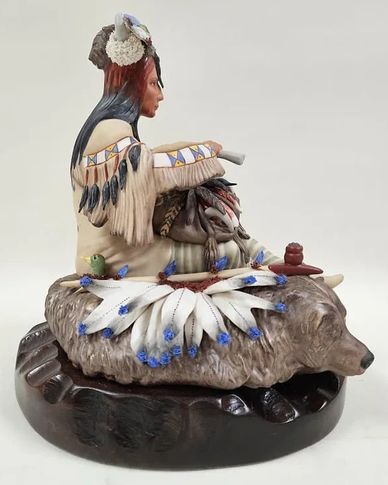
Part of the original group of three sculptures released in 1969, Blackfeet "Beaverhead" was completed in 1984 with no reduction to the declared total of 500 copies.
Issue / Completed Price
$2,000 $2,775
.
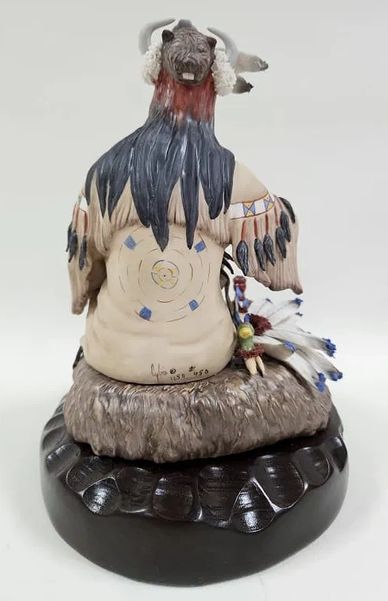
Unlike the Dakota and Onondaga, Blackfeet was released attached to his base.
.
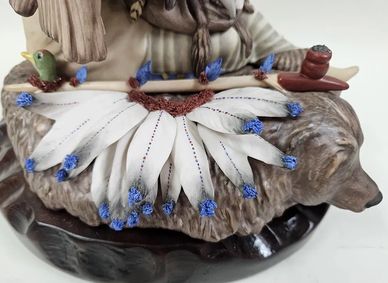
.

Introduced as a limited edition restricted to 350 copies for distribution among the lower 48 United States, an additional 150 copies were designated for distribution abroad. Chato was released as the sixth sculpture in the North American Indian collection.
Issue / Completed Price
$1,950 $3,975

By 1988 the declared number for the continental U.S. was increased to 500 with 50 for distribution outside the lower 48. Chato disappeared from the price list by the Fall of 1990. It is doubtful all 550 copies declared were ever produced.

The studio often changed base shapes and wood types depending on options available from the vendor. Pieces produced near the end of the production run have been seen with plain square bases.

Many of the accessories seen next to Chato are periodically missing on items sold on the secondary market. They have been broken off, usually due to improper handling.

The sticks in the fire will frequently be loose and or missing. The were attached with an adhesive/bonding agent.

No significant design variations have been noted but skin tones range from dark to light.
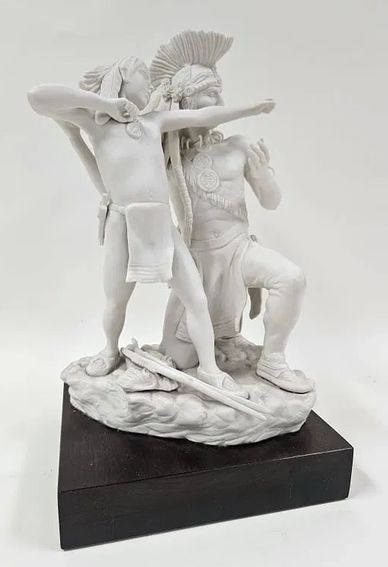
The full, official name shown is Cree Indian, Magic Boy. It was introduced as a numbered restricted edition limited to 100 copies. The release date given in later catalogs is 1971 but all marketing material mentions the first copy was given to Queen Elizabeth II in July of 1970. Cybis in Retrospect states the release was in 1970. Orders for the entire edition of 100 were placed so quickly the sculpture was listed as fully subscribed on the July 1971 price list. It was completed in 1973.
Issue / Completed Price
$2,500 $2,500
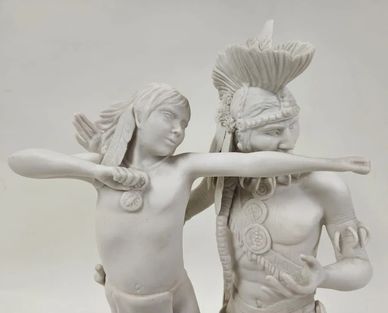
Magic Boy was released in the Commemorative collection. It appears two events were listed as being commemorated in this sculpture. Queen Elizabeth visited the Canadian province of Manitoba in 1970 to celebrate its centennial in July. She was presented the sculpture as a gift marking her visit during the centennial event. It was also noted the sculpture was released to honor the 300th anniversary of 400 delegates of the Cree tribe greeting traders at the newly chartered Hudson's Bay Company in 1670. The spirit of both of these historic events is captured in Magic Boy. Due to the sculpture being released as a commemorative piece, it was never included in the North American Indian collection. It was not found in the 1976 brochure titled "North American Indians - A first subscription of six". The brochure includes seven sculptures. It pictures the Dakota, Blackfeet, Shoshone, Iroquois, Apache and Onondaga. It also includes Eskimo Mother, while the Cree was omitted. Cree having been in the Commemorative collection is the only valid explanation for this omission.
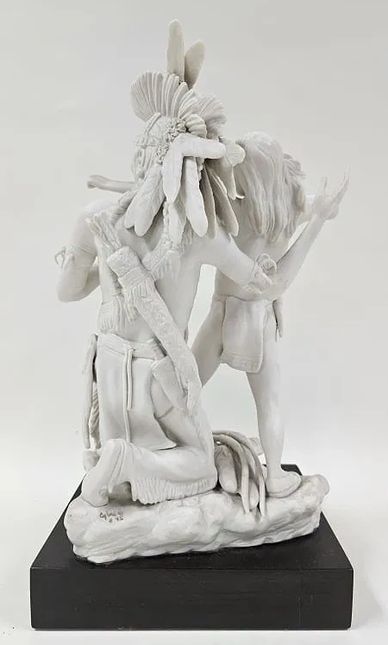
Stated measurements are 15 1/2" tall. This complex piece is not often seen on the secondary market but does periodically become available. No design variations have been noted. The design number was officially given as 706W, designating it as produced in white only. This "W" designation implied a color version was planned and would be forth coming. Eleven years after 706W was completed, "Cree Magic Boy" was released in color in the Fall of 1984. (Shown below)
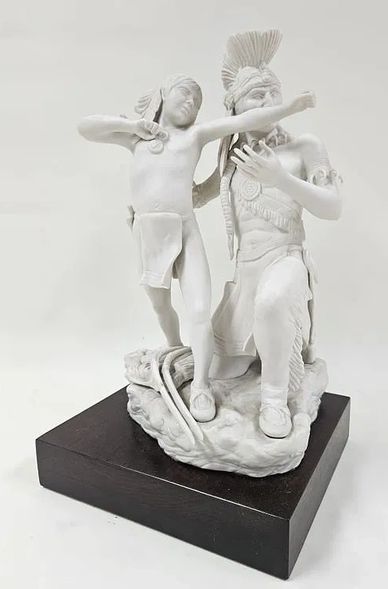
All Magic Boy sculptures were released attached to the wooden base. If found without the base the sculpture would be considered NOT mint even if the porcelain shows no signs of damage.
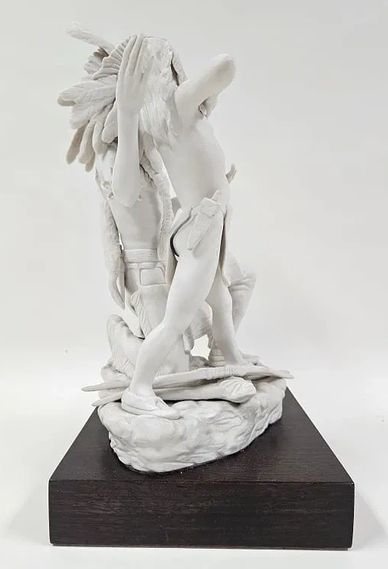
In the Spring of 1981 the studio released a second Indian sculpture in the Commemorative collection in all white. Kateri Tekakwitha, Lily of the Mohawks is a portrait of America's first native born nun. It's not known if any other all white North American Indian sculptures had ever been considered for the Commemorative collection.
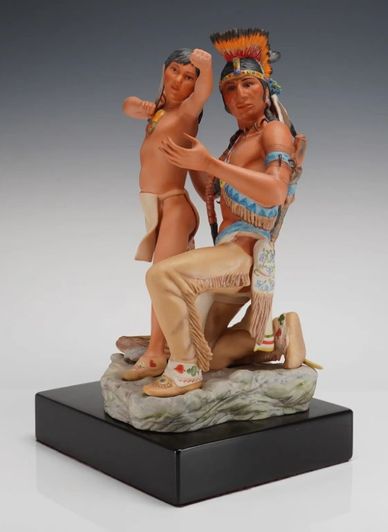
Released in 1984 as an edition of 200 for distribution in the continental U.S., an addition 20 copies were available outside the lower 48. That number was increased to 25 by 1988. It was completed in 1989.
Issue / Completed Price
$4,250 $5,475

Introduced as a limited edition restricted to 200 copies, Crow Dancer was completed in 1981. Unlike the other sculptures released in the American Indian collection, the Crow Dancer did not have a designated number of copies specified for distribution outside the continental U.S. It may have been determined the piece was too complex and fragile for extended shipping.
Issue / Completed Price
$3,875 $4,150

This introduction representing the Crow was the seventh sculpture in the collection of North American Indians. All 200 copies were produced in just under four years.
This piece is extremely complex and intricate requiring any prospective owner to spend extra time examining a potential purchase for damage or repairs. Numerous items have sold at auction in recent years with minimal to excessive damage. While a missing feather (held in his hand) is obvious many smaller damaged or missing parts could go unnoticed if careful diligence is not given.

At 19" tall, Great Thunder was the tallest of the sculptures in the collection when released in 1977. He was attached to the wooden base. Stated measurements given for items listed on the secondary market range from 18 1/2" to 19" tall.

.

.

No design variations have been noted. Minor differences are observed in skin tone.
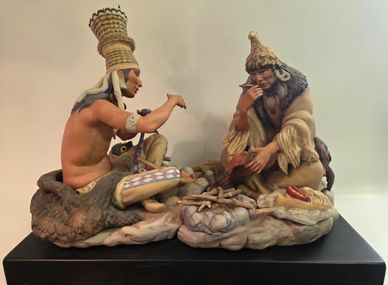
The Iroquois were introduced as the fifth sculpture in the North American Indian series. Released as a numbered edition limited to 350 copies, an additional 150 copies were declared for distribution outside the continental U.S. Upon its introduction, At the Council Fire was the most expensive sculpture in the North American Indian collection. It was the highest priced sculpture listed on the 1973 price list among all Cybis sculptures. Cybis publications indicate the edition size was reduced to less than half the declared number for a final count of 225. This was another obvious error in the studio's record keeping. Among the dozens of copies documented as having sold on the secondary market in the last 25 years, edition numbers 253, 277, 281, 289, 295, 348, 380 and 430 have all been recorded. It is highly probable ALL 500 copies were indeed produced and sold. The edition was completed and closed in 1981. It is not known how many copies were sold in the U.S. or how many were shipped outside the continental United States.
Issue / Completed Price
$4,250 $4,975
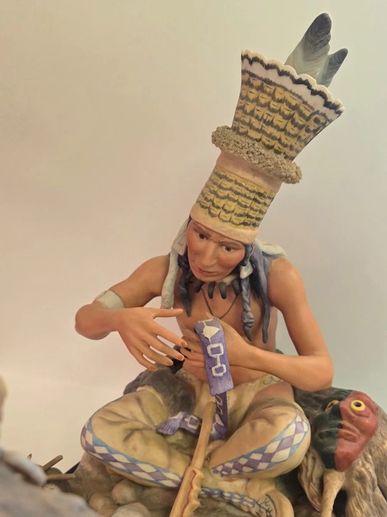
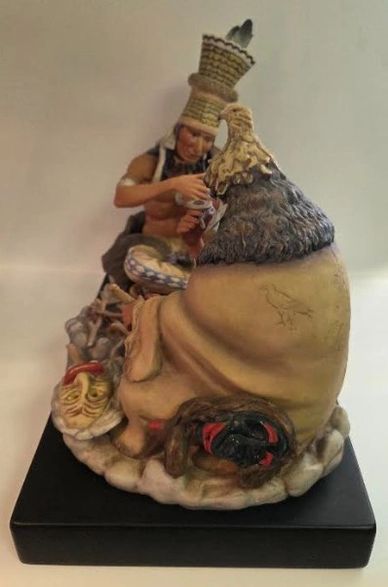
Who is who? Printed publications state the official full name of this sculpture as, Iroquois "At the Council Fire," DeKanawida and Atotarho. Because DeKanawida is the first name given in the sculpture's title, most assume DeKanawida is the man seated on the left. That's not the case. Cybis marketing material for Fall 1973 titled, The Phoenix, clarifies this where it states:
Iroquois, At the Council Fire
Left - Atotarho, Keeper of the Council Fire and Wampum
Right - Dekanawida, prophet, saint and mystic
A Wampum is a traditional belt made of polished shell beads used by the Iroquois for storytelling, recording treaties, and preserving council decisions around a council fire. The man on the left is holding a Wampum leaving no doubt as to each man's name.
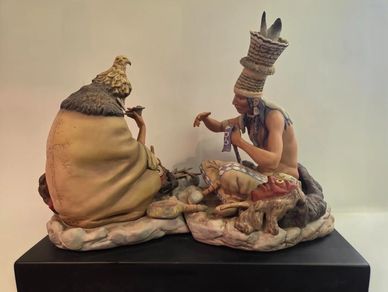
Measurements stated in publications are 13" tall by 16" long. Bases on the earlier copies are dark stained wood. Later sculptures made after 1979 will be found with bases made from a resin material introduced to reduce costs as the studio began experimenting with alternate materials. The example in this collection is #348 and has the black resin base.
As explained in the Q&A section found at the bottom of the home page, the studio often numbered individual sculptures out of order during production runs. If an edition was fully subscribed and all sculptures were sold, there was never a question about how the numbers were assigned. In the case of a few editions, the studio claimed the final number produced was less than the declared number. Yet sculptures with numbers higher than the reduced number regularly surface. Oddly enough there are explanations for this. Read the possible scenarios offered in the Q&A under "Why are some sculptures numbered higher than the restricted number declared?" Ironically, it is clear that none of those explanations apply to At the Council Fire. Carelessness, negligence and lack of proper review when preparing historical records is at fault here.
.
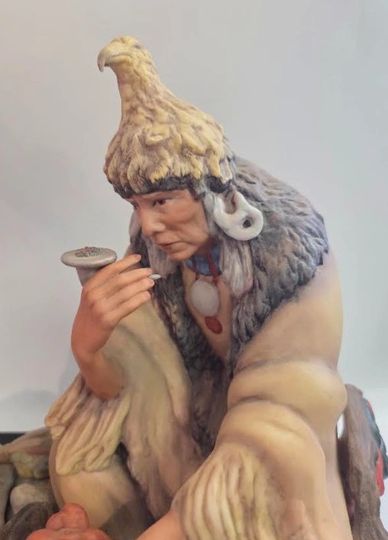
If mishandled or packed improperly for shipping, the pipe Dekanawida holds can become detached.
.
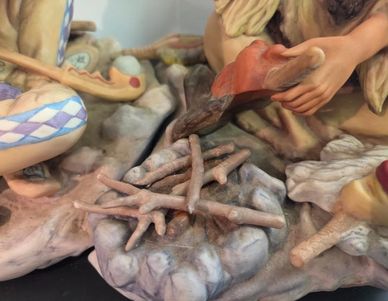
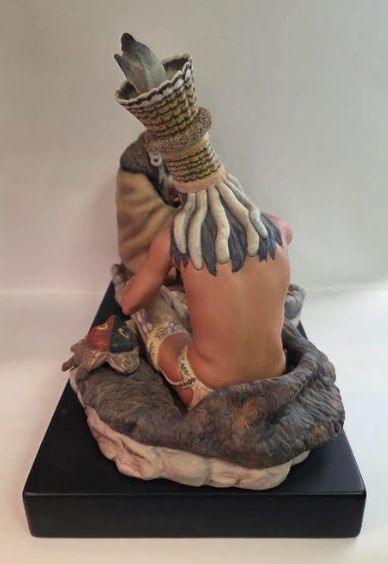
Two points of concern should be considered if purchasing this sculpture. The first area to note is the pile of sticks on the council fire. They are often seen missing or loose. The arrangement may vary from sculpture to the next. The earliest copies were attached with porcelain slip and fired creating a solid piece of porcelain. Later copies were attached with a bonding agent and often separated over time. The next area to examine is the top of the headdress worn by Atotarho. The three feathers will often be damaged or missing. Check for "repairs" or missing pieces. A piece with no damage will have three complete feathers as shown in the next images.
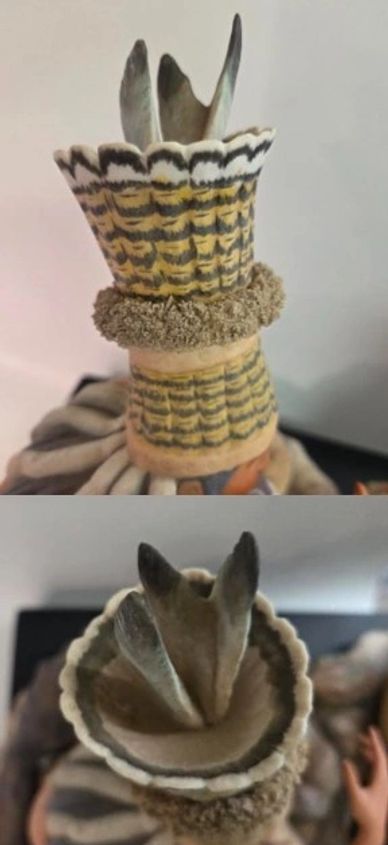
The next area to examine is the top of the headdress worn by Atotarho. The three feathers will often be damaged or missing.
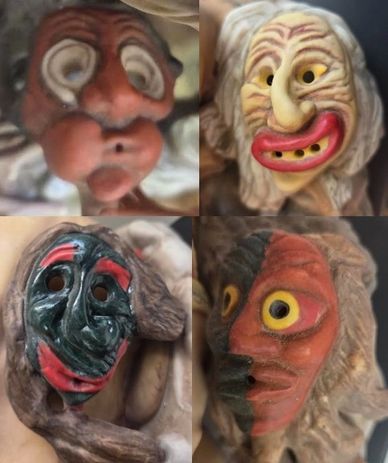
Only minor color variations have been noted while design variations are observed in the placement of the ceremonial masks from one sculpture to the next. Each sculpture should have a total of four masks attached in various places around the base of the sculpture.

The Great Spirit was introduced in 1979 as a limited edition restricted to 200. No additional copies were designated for distribution beyond the continental United States. All 200 copies were produced and the edition was closed in 1983.
Issue / Completed Price
$3,500 $4,150

.

.

.

.

Introduced as a limited edition restricted to 200 copies, that number was later increased to allow for an additional 25 copies for distribution beyond the 48 contiguous United States. By 1988 his name was shortened to Choctaw Tascalusa.
Issue / Completed Price
$2,475 $4,950 on the 1999 price list

The price increases on this piece more than doubled over the 17 years it appeared on published price lists. While availability continued on the studio's website into the 2000's it was never completed.

A majority of the sculptures appearing on the secondary market have been noted with damage to the lacrosse sticks. They are found broken, missing or replaced various items as substitutes.

Introduced as a limited edition restricted to 200 copies, that number was later increased to allow for an additional 25 copies for distribution beyond the 48 contiguous United States.
Issue / Completed Price
$3,250 $4,950 on the 1999 price list

.

.

.

.

Initially released the Yaqui was introduced as a limited edition restricted to 200 copies for release in the continental U.S. and 15 for distribution beyond the 48 contiguous states. The number for distribution outside the lower 48 was later increased to 25.
Issue / Completed Price
$2,095 $3,995 on the 1999 price list

.